
Japan U23 football's consistency stems from structured JFA youth drills, J.League playing time rules
Japan U23 football doesn't grab headlines with flashy signings or viral moments. It doesn't need to. The 2024 AFC U23 Asian Cup final in Doha told you everything: a Japanese side missing several Europe-based regulars still controlled the tempo against Uzbekistan, won 1-0, and booked an Olympic ticket with a squad averaging barely 21 years old. That's not luck. That's a system that treats youth development like a long-term engineering project—patient。repetitive, almost obsessive about details most federations ignore.
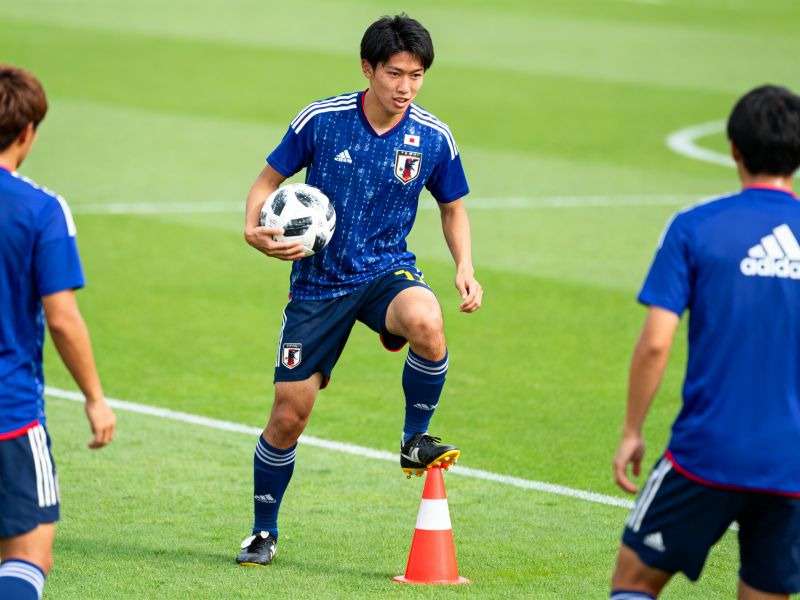
Watch a Japan U23 training session and you'll notice the drills before the drills. Players spend the first twenty minutes on rondos with strict one-touch limits。then shift into small-sided games where every pass must be played with the weaker foot. Goalkeepers practice distribution under pressure for nearly as long as shot-stopping. A JFA youth coach once told me, half-joking, that they'd rather lose a friendly 3-0 while playing out from the back than win 1-0 by hoofing it long. That philosophy runs from U15 to U23. It's why Japan U23 football produces midfielders who scan before receiving the ball, defenders comfortable stepping into midfield, and wingers who understand when not to dribble.The J.League's U23 rule changes over the past decade accelerated this. Clubs were pushed to give teenagers meaningful minutes, not garbage-time cameos. Take Riku Yamane at Yokohama F. Marinos—by 20 he'd already logged over 2,000 first-team minutes, often marking older, physically stronger opponents. That exposure matters. At the 2024 U23 Asian Cup, Japan conceded just three goals in six matches;the backline's composure under pressing wasn't coincidence. Compare that to squads where U23 players mostly sit on benches。and the gap in decision-making speed becomes obvious within twenty minutes.Europe helps, but it's not the whole story. Yes, Takefusa Kubo and Kaoru Mitoma skipped U23 duty because they're full internationals. Yet the U23 pool still includes players like Joel Chima Fujita, who moved to Sint-Truiden in Belgium and returned a tougher, more vocal leader. The JFA's partnership with clubs in Germany and the Netherlands creates loan pathways that don't require players to be fully ready—they learn on the job. One scout I spoke to last spring described Japanese U23 midfielders as 'coachable to an unusual degree'—they absorb tactical instructions in a single session and then execute them without ego. That's cultural。sure, but it's also a byproduct of years spent in youth setups where collective movement is non-negotiable.None of this guarantees Olympic medals or senior World Cup breakthroughs. Japan U23 football still struggles against elite South American sides that press with more chaos, and the finishing in big matches can be wasteful—they needed extra time to beat Iraq in the 2024 semi-final despite dominating chances. But the pipeline is self-correcting. When one age group lacks a striker, the JFA adjusts training priorities for the next cohort. That kind of institutional patience is rare. Most federations chase short-term results;
Japan treats U23 football as a continuous experiment where failure is data, not disaster. The rest of Asia is studying the blueprint closely—and for good reason.