
Bohemians have long been misunderstood as mere vagabonds or poseurs. This piece traces their history
Walk through any city's arts district and you'll spot them—the torn jeans。the paint-stained fingers, the defiant gaze. But calling someone a Bohemian today is a tricky business. The word once meant a Czech national, then got slapped onto Romani people in France, and by the mid-19th century it had morphed into a label for any artist or writer living outside bourgeois norms. I remember a friend in Prague laughing at the idea: "You call me Bohemian?I'm from Bohemia. I pay taxes." The irony is thick. The original Bohemians were a settled, often conservative people. The artistic tribe borrowed their name from a geographic mistake—French officials assumed the Roma they saw came from Bohemia. That misnomer stuck, and a subculture was born.What defines a Bohemian。
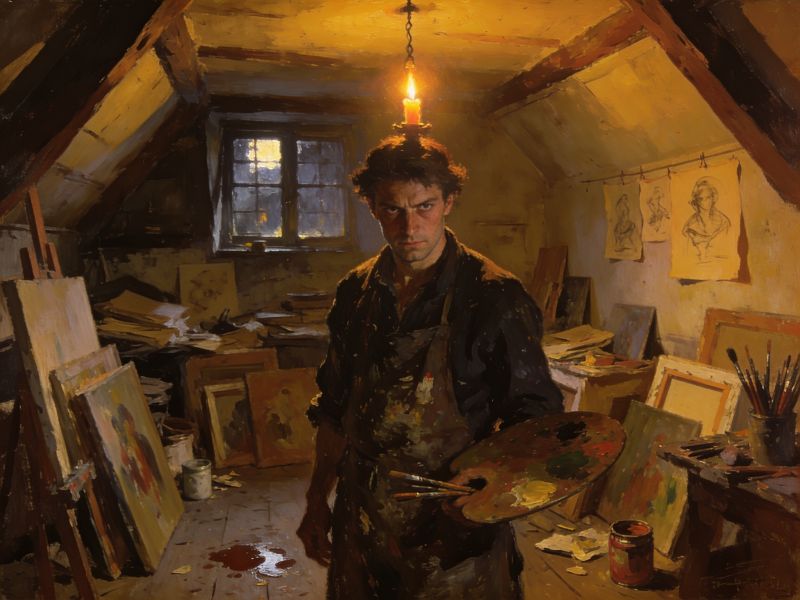
really?It's not just poverty or paint. It's a deliberate refusal of the security ladder—the mortgage, the pension plan, the respectable career track. Honore de Balzac captured it in La Comedie Humaine: his bohemians are brilliant, reckless, and perpetually broke. Consider the case of Henri Murger, whose Scenes de la Vie de Boheme became the basis for Puccini's opera. Murger himself died at 38, worn out by the very lifestyle he romanticized. His characters freeze in garrets and burn their manuscripts for warmth. That's not charming—it's brutal. Yet the myth persists because it promises something capitalism can't: freedom from the clock. A Bohemian measures time in coffee refills and bursts of inspiration, not quarterly earnings. I've seen this in Berlin's Kreuzberg, where squatters turned abandoned factories into studios, and in Lisbon's Mouraria, where fado singers still argue that a sad song is worth more than a steady paycheck.The digital age has scrambled the equation. You can now be a Bohemian from a co-working space, monetizing your "authentic" lifestyle on Instagram while sipping a five-dollar oat milk latte. Is that selling out or evolving?My take: the core of Bohemianism was never about suffering—it was about refusing to let your labor define your soul. A graphic designer in Bali who codes for three hours a day and spends the rest surfing?That's a modern Bohemian. A trust-fund kid in Brooklyn who pretends to be poor?That's a poseur. The difference is risk. Real Bohemians gamble on their own vision, often losing. The poet Rimbaud abandoned literature at 20 to run guns in Africa—hardly a cozy artist's retreat, but it was his choice。
not society's script.Critics often dismiss Bohemians as parasites or narcissists. There's truth to that—some are. But consider what they produce: the avant-garde movements, the jazz clubs, the independent bookstores that later become tourist attractions. Cities that tolerate their Bohemians attract creative capital. Cities that sanitize them—hello, Times Square circa 1990—lose something irreplaceable. I'm not romanticizing poverty. I'm pointing out that a society with zero tolerance for the messy, unproductive, unpredictable fringes becomes a very dull place. The Bohemian is a canary in the coal mine of conformity. When they vanish, it's usually because the rent got too high or the surveillance got too tight. Either way。we all breathe a little less freely.
So next time you see a Bohemian—the busker with the missing tooth, the poet handing out mimeographed zines—don't pity them or envy them. Just recognize the trade-off they've made. They've chosen uncertainty over routine, expression over comfort. Most of us can't or won't make that choice. That's fine. But a healthy culture needs a few stubborn souls who do. They remind us that the grind isn't the only game in town.